Carle Health is home to some of the most advanced neuroscience services and technology available. Our team of specialists is uniquely trained to treat diseases and injuries of the brain, spine, spinal cord and nervous system. Our comprehensive range of neuroscience diagnostic and surgical services help thousands of area patients live longer, manage their conditions and discover an improved quality of life.
Our expert team made up of providers from both Carle Foundation Hospital and Carle BroMenn Medical Center work together to create custom treatment plans that not only treat the tumor itself but get our patients back into the routine of their daily lives.
Carle Foundation Hospital is accredited by the NAEC as a level 3 epilepsy center.
Our team has experience treating all types of conditions of the brain, spine, and nervous system and works together to determine the best treatment for your individual needs.
Carle Health neuro-ophthalmologists are specially trained in both neurology and ophthalmology and use leading edge techniques to diagnose vision issues related to conditions such as brain injury, stroke, tumors, multiple sclerosis, migraines and more.
Clinical neuropsychology examines the relationship between brain anatomy and cognitive abilities such as attention/concentration, memory, problem solving and language, and how these abilities may be affected by injury or disease.
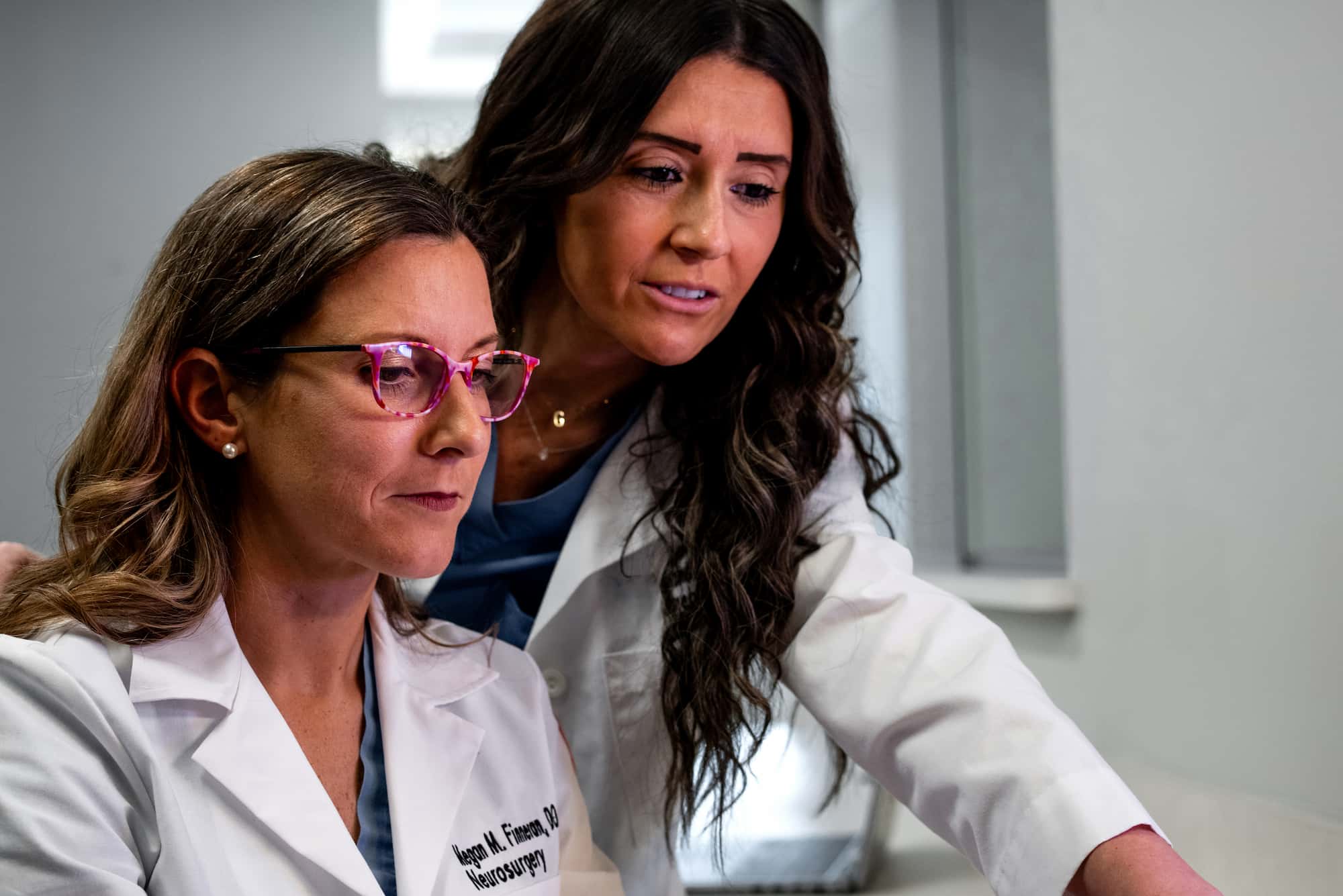
Carle Neuroscience Institute is home to a dedicated team of board-certified neurosurgeons, specializing in surgical care for patients with complex brain and spine conditions.
Our multidisciplinary approach offers comprehensive care for a range of spinal conditions without surgical intervention and can provide pain management therapies.
Sleep Medicine specialists at Carle Health can assess, diagnose and treat a full range of sleep disorders for both adults and children.
The spine specialists at Carle Health are focused on identifying the source of your back or neck pain so they can develop an individualized treatment plan to get you back to regular activity.
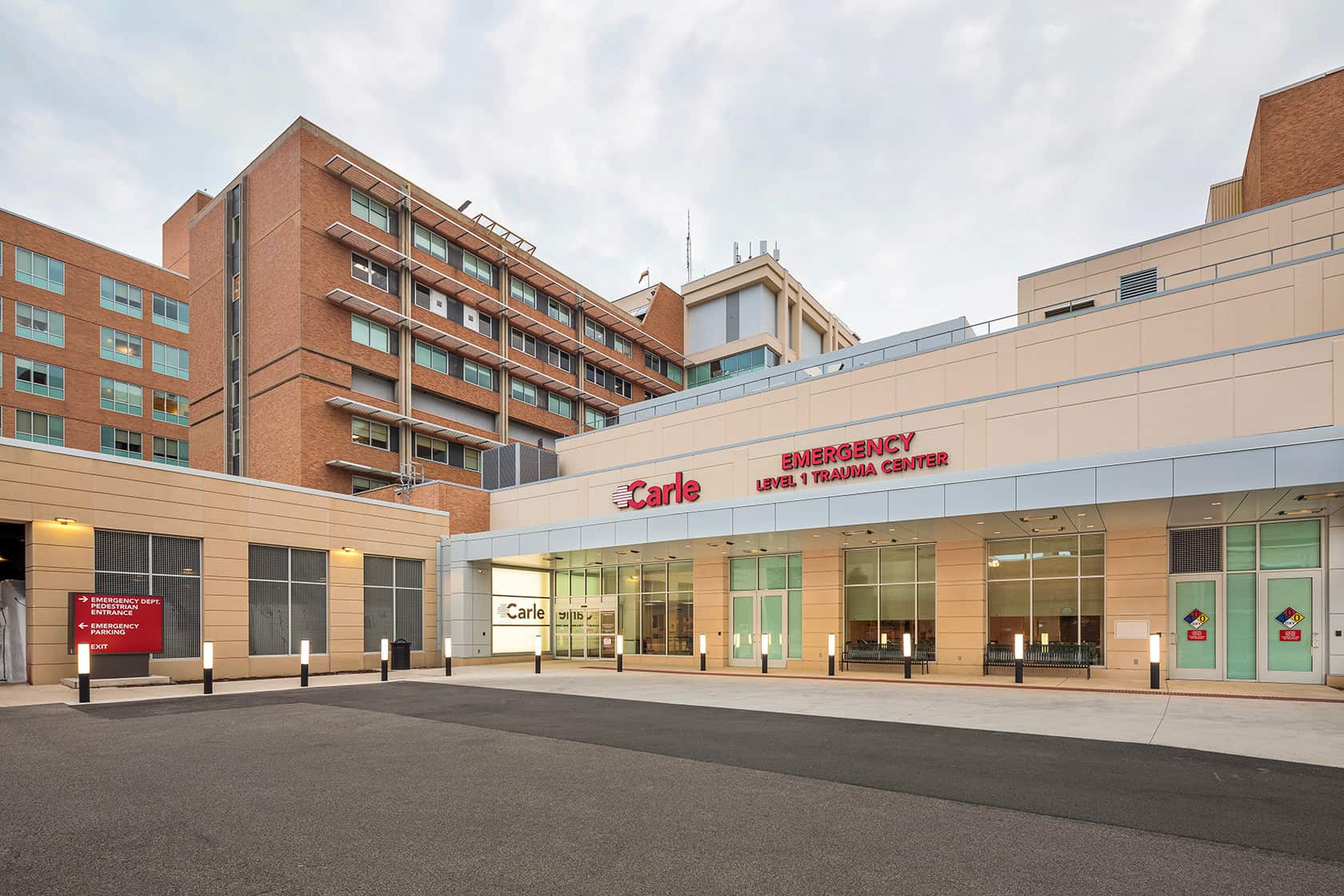
As the only certified Comprehensive Stroke Center in the region in a Level I Trauma Center, Carle Foundation Hospital has neurosurgeons and neurointerventional specialists available 24/7 to ensure faster stroke treatment and better outcomes for patients experiencing a stroke.
Have a patient referral? Refer a patient now.
Neuroscience research at Carle Health represents the intersection of technology, medicine, science, and care. By providing our patients with the opportunity to participate in translational and clinical studies we hope to engage them in not only their own care but also the future of medicine. Our researchers and providers strive to advance diagnostic capabilities, understand causes and effects, and improve patient quality of life. Our research department supports clinicians and faculty alike in their efforts to provide excellent care and perform extraordinary science.
By participating in research studies, Carle Neuroscience Institute seeks to create a better understanding of the structure and function of neurological systems allowing us to advance clinical care possible and ultimately improve the overall promotion of human health and quality of life.
Carle Neuroscience Institute Research is known for demonstrating improved clinical outcomes for patients through research efforts that focus on the development of predictive analysis, novel diagnostics, and comparative efficacy.
The purpose of this multi-center, prospective, observational registry is to gather information on the clinical outcomes and real-world use of commercially available bone graft substitutes manufactured by OssDsign® AB, in patients who require spine fusion.
The purpose of this research study is to better understand how the movement and sensory pathways in the brain may be altered after a stroke.
Significant motor impairments occur in 80% of individuals after moderate to severe stroke and impact the body side to the lesioned hemisphere. Typical motor impairments involve loss of dexterity with highly prevalent upper limb flexion synergy. Advances in treating flexion synergy impairments have been hampered by a lack of precision rehabilitation. Previous studies suggest and support the role of cortico-reticulospinal tract (CRST) hyperexcitability in post-stroke flexion synergy. CRST hyperexcitability is often caused by damage to the corticospinal tract (CST). We hypothesize that: 1) inhibiting the contralesional dorsal premotor cortex (cPMd) will directly reduce the CRST hyperexcitability and thus, reduce the expression of the flexion synergy; 2) facilitating the ipsilesional primary motor cortex (iM1) will improve the excitability of the damaged CST, therefore reducing the CRST hyperexcitability and the flexion synergy. we propose to use a novel targeted high-definition tDCS (THD-tDCS) to specifically modulate the targeted cortical regions for testing his hypothesis, via the following aims: Aim 1. Evaluate the effect of cathodal THD-tDCS over the cPMd on reducing the CRST hyperexcitability and the expression of flexion synergy. Aim 2. Evaluate the effect of anodal THD-tDCS over the iM1 on improving the excitability of the CST, and determine whether this, thus, also reduces the CRST hyperexcitability and the flexion synergy. Aim 3. Evaluate the confluence effect of bilateral THD-tDCS, i.e., simultaneous cathodal stimulation over the cPMd and anodal over the iM1.
With doctors practicing in 80 specialties at locations throughout the region, it’s easy to find the right healthcare team at Carle. Our mission is to serve people through high quality care, medical research and education.
More important than leading-edge tools is the Carle Neuroscience Institute collaborative approach to diagnosis and treatment.
DONATE NOW READ FULL ARTICLERecognized among the nation’s top hospitals, Carle provides excellent healthcare while continuously improving to meet the needs of our patients.